Box Escape: Survival Launcher
torsopolecatsRole Playing
4.329.00 Reviews
- Version
- 1.0.8
- Installs
- 1.00M
- Age Rating
- Everyone
Screenshots
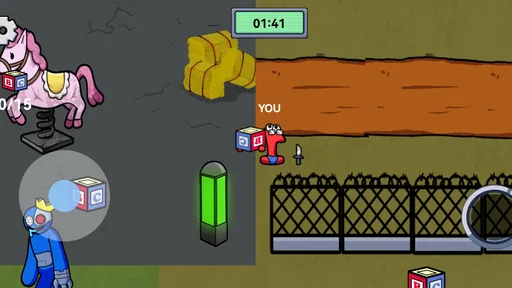
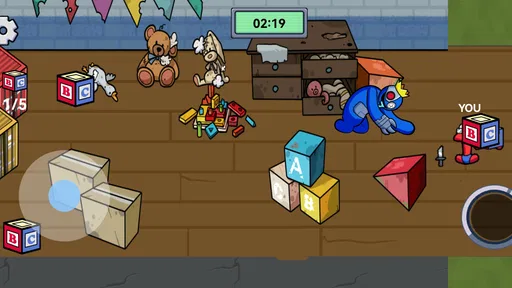
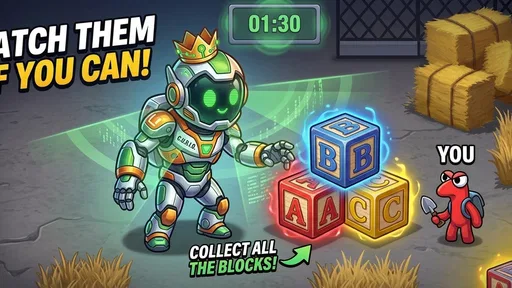
Our Review of Box Escape: Survival Launcher
 Analysis by Appyee
Box Escape: Survival Launcher is a small, focused role-playing game built around a simple emergency: move boxes into safe positions while staying ahead of hungry monsters. I found the appeal almost immediately. It does not ask me to learn a large world, manage a long list of characters, or understand a complicated battle system before having fun. Instead, it puts pressure on a familiar puzzle action—pushing objects—then adds danger and timing.
That combination makes the game easy to understand but not automatically easy to play. A box that looks harmlessly placed can become an obstacle a moment later, and moving too quickly can leave a route blocked when the monsters close in. My first useful lesson was that survival depends less on frantic movement than on looking at the space before committing to a push. The safest move is often the one that preserves your next escape route, not the one that gets the nearest box into position.
The game is free, aimed at Everyone, and developed by torsopolecats. It sits in the role-playing category, although its moment-to-moment appeal is closer to a compact action-puzzle challenge than to a traditional story-heavy RPG. The store presents it as Box Escape, while the fuller title is Box Escape: Survival Launcher. That distinction is useful when searching for it, especially if several similarly named games appear in an app store.
Getting oriented before the first escape
The first-time experience is refreshingly direct. I did not need to prepare a character build or study a long tutorial before understanding the basic goal. The central loop is visible through play: identify where a box needs to go, push it without trapping yourself, and keep moving when the monsters turn the open space into a threat. For a new player, that clarity matters more than a pile of introductory menus.
The game has reached over a million installs and holds a 4.1 average from around 1,200 ratings, so it has clearly found an audience beyond a handful of curious players. I would not treat those figures as a promise that everyone will enjoy it, but they do fit my impression of a game that is quick to sample and easy to explain to someone else. Its free price also removes the usual hesitation before trying a short-session game.
Before starting, I recommend deciding what kind of session you want. This is a good choice for a brief break, a waiting room, or a few attempts when I want something interactive without committing to a long campaign. It is less suitable when I am looking for a deep narrative, extensive character customization, or a relaxed puzzle game with no pressure. The monsters change the mood: even a simple box arrangement can become urgent once movement and escape have to happen together.
The age rating of Everyone makes the premise approachable for a broad audience, but younger players may still need a little patience with the spatial logic. The challenge is not about mature subject matter; it is about understanding consequences. A push can solve one problem while creating another, and the game expects the player to notice that relationship rather than simply react to whatever is closest.
What I would do on the first launch
My advice is to begin slowly instead of treating the opening attempt like a race. Look at the available space and mentally mark two things: the box that appears most urgent and the area you would use if a monster approached. That second observation is easy to skip, but it became one of the most useful habits in my play. If I only thought about the target box, I often made progress and then discovered that my own placement had removed the only convenient path out.
It also helps to separate movement from planning. I first decide whether a push is reversible or effectively permanent in the current layout. Then I move. This sounds obvious, yet the pressure encourages quick decisions. Treating every box as part of the map—not merely as an object to deliver—makes the opening much less confusing.
I would not worry about playing perfectly on the first attempt. Early failure is useful because it shows how much room the monsters leave for correction and which pushes create trouble. Instead of restarting after every imperfect move, I prefer to continue long enough to understand the chain reaction. That gives a better feel for the level than repeatedly chasing an ideal opening without learning why it works.
The first meaningful success
The first satisfying breakthrough comes when a box reaches a safe position and I still have a clear route to move afterward. That is more informative than simply pushing something into place. It proves that the arrangement works under pressure, not just on an empty board. When I reached that point, the game’s design clicked: the objective and the escape problem are connected, but they are not the same task.
A practical beginner routine is to choose the box with the fewest safe approaches, make room around it, and leave the easiest box for later. This reverses the instinct to handle whatever is nearest. The difficult box usually determines the shape of the whole space, while an easy box can often wait. I also try to avoid pushing two boxes into the same narrow area unless I already know how I will separate them.
When a monster appears or begins closing the distance, I resist the urge to push immediately. First I check whether moving myself creates a better angle. Sometimes the right response is to circle around and approach the box from another side rather than forcing a direct push. This is one of the game’s less obvious lessons: your position is a tool for solving the box problem. A bad angle can make a simple objective impossible, while a short detour can restore control.
For everyday play, imagine opening the game during a ten-minute break. I would make one attempt with the goal of learning the layout, then a second with a deliberate plan for the most awkward box. That approach is more rewarding than trying to rush through several attempts. It also keeps the game from feeling like a test of reflexes alone. The useful progress is learning which decisions preserve options.
Where new players usually get confused
The word “safe” can be misleading at first. A box may appear to be in the correct area, yet its placement can narrow the route needed to escape. I learned to judge a successful push by two questions: did the box improve the objective, and did I retain enough room to move around it? If the answer to the second question is no, the move may only be temporary progress.
Another common mistake is standing too close to a box before deciding where to push it. That limits the available direction and encourages an accidental commitment. I get better results by moving to a position that gives me a choice of approaches. This small adjustment turns the game from a sequence of forced reactions into a series of controlled decisions.
The monsters also create a false sense that every second must be spent moving. In my experience, a short pause to read the space can save much more time than a panicked run. The danger is real, but the game rewards awareness. If I push while distracted by the nearest threat, I can create a blockage that is harder to escape than the original chase.
When an attempt goes badly, I look for the first irreversible decision rather than blaming the final mistake. Usually the failure began with a box placed against an edge, a route closed too early, or a movement made without leaving a fallback position. Reviewing that moment gives me a concrete adjustment for the next try. This is especially helpful for players who normally avoid puzzle games because they assume failure means they lack quick reflexes.
How it compares with other role-playing games
Compared with conventional role-playing games, this one removes much of the usual preparation. There is no need to spend time comparing equipment, reading a large amount of dialogue, or planning a long-term character path before the core challenge becomes enjoyable. That makes it more approachable when I want a game I can understand in a few minutes.
The trade-off is variety. Players who enjoy collecting heroes, building elaborate teams, exploring a large map, or watching a story unfold may find the focus too narrow. Box Escape gets its interest from the interaction between space, boxes, and pursuit. If that loop does not hold your attention, a broader RPG with quests and progression will probably be a better fit.
It also differs from a purely calm box-pushing puzzle. Traditional versions let me think without a pursuer changing the urgency of each decision. Here, the threat makes a familiar action more tense, but it can also make mistakes feel less comfortable to analyze. I prefer this version when I want pressure and replayable problem-solving. I would choose a slower alternative when I am tired, playing on a small screen, or specifically looking for a meditative experience.
Against an action game built almost entirely around reflexes, Box Escape feels more deliberate. Quick movement matters, but it cannot replace spatial planning. That balance is a strength for players who like action with a puzzle underneath it. On the other hand, anyone expecting constant combat or a rapid stream of visual rewards may find the box placement more important than the chase itself.
Small habits that make later attempts better
One useful habit is to identify a “reset area” before pushing anything. I use that phrase for an open section where I can reposition myself if the immediate plan stops working. Keeping one such area available prevents the board from becoming a collection of narrow dead ends. It is a simple form of risk management, but it changes how confidently I approach difficult placements.
I also try to solve in layers. First I create access to the most restrictive box. Next I place it while preserving a route around the result. Only then do I finish the easier movement. This avoids the common trap of making the board look almost complete while leaving the final box impossible to approach. The game does not need a complex strategy guide; it needs the player to think one push beyond the visible objective.
A third tip is to watch the relationship between the monster’s position and the box rather than tracking either one alone. A monster can make a previously safe side unavailable, while a box can provide a temporary barrier or remove one. I do not assume that every obstacle is bad. Sometimes a carefully placed box changes the shape of the chase in my favor, provided I have not sealed my own route.
For touch-screen play, deliberate inputs are more valuable than repeated taps. I make each movement with a clear purpose and check the result before issuing the next one. This is particularly important when the screen is busy or when I am playing one-handed. The game’s compact premise works well on a phone, but the same simplicity means an unintended movement can have a noticeable effect on the whole attempt.
Who should install it, and who should skip it
I would recommend this game to someone who likes compact challenges, spatial puzzles, and the tension of escaping a threat without needing a long tutorial. It is a good introduction to games where planning and movement matter equally. It also suits players who enjoy replaying a situation to improve one decision at a time rather than needing a large amount of new content in every session.
I would be more cautious about recommending it to someone who wants a story-led RPG or a deep progression system. The role-playing label may create expectations of quests, character development, or extensive customization, while the attraction here is the immediate box-and-monster loop. It is also not my first choice for a completely relaxing puzzle session, because the pursuit changes the emotional pace.
Players with older devices should note that the current version is 1.0.8 and requires Android 8.0 or later. That makes checking the phone’s operating system worthwhile before installing. The game is available at no cost, which makes trying it low-risk, but the more important compatibility question is whether your device meets that minimum and whether you enjoy pressure layered onto object-pushing puzzles.
The developer, torsopolecats, has kept the concept easy to communicate: move boxes, protect your route, and survive the monsters. What I appreciate is that the simple premise leaves room for personal improvement. My success came less from discovering a hidden shortcut and more from changing how I read the board. That gives the game a fair learning curve without making the first attempt feel inaccessible.
My next-step recommendation
After the first successful escape, I would not immediately try to play faster. I would replay with one specific goal: finish while preserving a wider route than necessary. That experiment reveals whether the previous success depended on a risky bottleneck or on a genuinely strong arrangement. It also builds the habit that matters most in this game—solving the objective without sacrificing future movement.
For a first-time user, the path is reassuringly clear. Install it if the device runs Android 8.0 or later, begin with a slow inspection, choose the most restrictive box, and treat every push as a decision about both the target and your escape space. When the monsters appear, avoid panic and look for the next safe position rather than the fastest-looking action.
My final view is positive, with a clear qualification: this is a focused game, not a replacement for a large role-playing adventure. Its best moments come from turning a basic box puzzle into a tense survival calculation. If you enjoy learning layouts, correcting mistakes, and finding safer routes under pressure, I think it is worth trying. If you need narrative depth or a quiet, consequence-free puzzle, another genre choice will serve you better.
For me, the strongest reason to keep it installed is the satisfying moment when a plan works for two reasons at once: the box is where it needs to be, and I am still free to move. That small success captures what Box Escape does well. It takes a straightforward action and makes me consider timing, space, and risk without burying the idea under unnecessary complexity.
Verdict
Strengths of Box Escape: Survival Launcher
- Simple controls make it easy to start playing immediately.
- Short escape challenges are well suited to quick gaming sessions.
- Survival mechanics add pressure and keep each attempt engaging.
- The launcher-style gameplay offers a different take on escape games.
- Progressing through hazards can feel rewarding after repeated attempts.
Limitations of Box Escape: Survival Launcher
- Repeated attempts may become monotonous for some players.
- Difficulty spikes can make later challenges feel frustrating.
- The game may offer limited depth beyond its core escape mechanic.
- Frequent ads could interrupt gameplay, depending on the device version.
- Players looking for a story may find the narrative experience minimal.
Similar Picks in This Category
View All
Hair Dye
CrazyLabs LTD4.4

Monster High™ Beauty Salon
CrazyLabs LTD4.5

Bus Simulator - Bus Games 3D
Jima Apps4.4

Flight Pilot: 3D Simulator
Wildlife Studios4.1


Super Stylist Fashion Makeover
CrazyLabs LTD4.4
Frequently Asked Questions
What is Box Escape: Survival Launcher about?
Box Escape: Survival Launcher is an action-survival game built around launching, aiming, and escaping through dangerous environments. During play, you generally need to control your direction, avoid hazards, overcome obstacles, and use the launcher mechanics at the right moment. Its compact levels make it easy to play in short sessions, while progressively harder challenges test timing, accuracy, and decision-making.
Is Box Escape: Survival Launcher free to download and play?
The game can typically be downloaded without an upfront purchase, although the exact availability and monetization may depend on whether you install it on Android or iOS. Free versions may include advertising, optional in-app purchases, or both. Before downloading, check the store listing for current pricing, supported devices, purchase details, and whether any features or items require payment.
Does the game require an internet connection?
Box Escape: Survival Launcher may allow some gameplay without a constant connection, which is useful when traveling or playing in areas with limited service. However, advertisements, updates, cloud-related features, purchases, or other online services can require internet access. It is best to launch the game once while connected and verify which modes remain available offline on your particular device.
Is Box Escape: Survival Launcher suitable for children?
The game’s simple controls and arcade-style presentation may make it accessible to younger players, but parents should still review its age rating and store description before installation. Difficulty, fast reactions, failure-based progression, advertisements, and optional purchases can affect the experience. If children use the device, parental controls and purchase restrictions are recommended, especially when the game is played unsupervised.
What devices are needed to play Box Escape: Survival Launcher smoothly?
Because performance can vary between phones and tablets, you should confirm the current Android or iOS requirements on the official store page before downloading. A reasonably recent operating system, sufficient free storage, and updated graphics drivers or system software can help prevent crashes and slowdowns. Older devices may still run the game, but loading times, frame rate, or visual quality could be reduced.
Play our best games!


